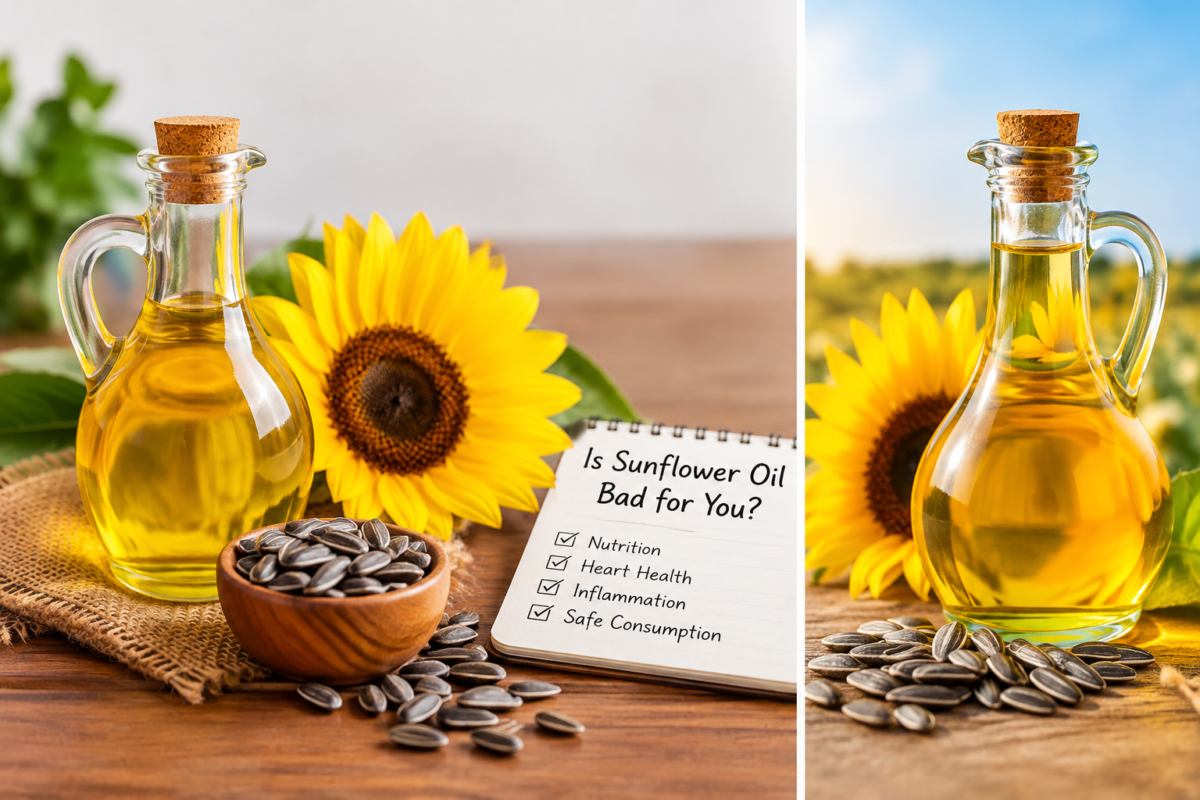
Sunflower oil is a common cooking oil used in homes, restaurants, and food manufacturing. It is popular because of its mild flavor, versatility, and availability. However, questions about seed oils have led many people to wonder whether sunflower oil is actually good for their health.
So, is sunflower oil bad for you? Not necessarily. Sunflower oil contains mostly unsaturated fats, which can be a beneficial replacement for saturated fats such as butter or lard. However, its nutritional properties depend on the type of sunflower oil, how it is used, and the overall quality of your diet.
Understanding the advantages and limitations of sunflower oil can help you make informed decisions about using it in everyday cooking. Learn more about sunflower oil.
Why Do Some People Say Sunflower Oil Is Unhealthy?
Sunflower oil has attracted criticism because it is a seed oil, contains omega-6 fatty acids, and is often used in processed foods. Some online discussions suggest that these characteristics make it harmful to human health.
However, the evidence is more nuanced.
Sunflower oil contains linoleic acid, an essential omega-6 fatty acid that the body needs but cannot produce on its own. Although some people worry that omega-6 fats promote inflammation, research does not support the broad claim that consuming linoleic acid necessarily increases inflammation in healthy people.
According to Harvard Health Publishing, seed oils such as sunflower, soybean, and canola oil are not inherently unhealthy. Their effects depend partly on how they are used and the foods they are consumed with.
Another concern is that sunflower oil is sometimes found in packaged snacks, fried foods, and other highly processed products. However, the presence of sunflower oil does not automatically make a food unhealthy. The overall nutritional composition of the food also matters.
In short, sunflower oil should be evaluated based on its composition, preparation, and place in your diet rather than broad claims about seed oils.
What Are the Disadvantages of Sunflower Oil?
Although sunflower oil can be part of a balanced diet, it has some limitations worth understanding.
1. It Is High in Calories
Like other cooking oils, sunflower oil provides approximately 120 calories per tablespoon. Using large quantities can increase your overall calorie intake, particularly when oil is added to several meals throughout the day.
Portion control is therefore important, even when using oils rich in unsaturated fats.
2. Some Types Are Less Stable at High Temperatures
Conventional sunflower oil is often rich in polyunsaturated fats. These fats are more susceptible to oxidation than monounsaturated fats when exposed to heat, oxygen, and prolonged storage.
Repeatedly heating or reusing cooking oil can accelerate its degradation. For frequent high-temperature cooking, high-oleic sunflower oil may be a more suitable option because it contains more monounsaturated fat.
3. Refining Removes Some Natural Components
Refined sunflower oil undergoes processing to improve its color, flavor, odor, and consistency. Depending on the processing method, some naturally occurring compounds may be reduced or removed.
However, refining does not automatically make sunflower oil unhealthy. The finished oil’s composition, quality, and intended use are important considerations.
4. It May Be Used in Foods High in Salt, Sugar, or Calories
Sunflower oil is commonly used in crisps, fried snacks, biscuits, and other packaged products.
Eating these foods frequently may contribute to an unbalanced diet, depending on their overall nutritional content. The concern is not necessarily sunflower oil itself, but the wider food choices and quantities involved.
What Are the Side Effects of Consuming Sunflower Oil?
Most people can consume sunflower oil as part of a balanced diet without experiencing specific side effects. Nevertheless, certain circumstances can make its use less suitable.
Excessive calorie intake: Consuming large quantities of any oil can contribute to a calorie surplus and unwanted weight gain over time.
Digestive discomfort: Large amounts of dietary fat may cause discomfort, nausea, or loose stools in some people, especially those who have difficulty digesting fatty meals.
Allergic reactions: Sunflower oil allergy is possible, although reactions depend partly on the individual and the product. Anyone with a known sunflower allergy should follow advice from their healthcare professional.
Exposure to degraded cooking oil: Oil that has been overheated, repeatedly reused, or stored improperly may develop undesirable degradation products. Avoid using oil that smokes excessively or develops an unusual, rancid smell.
These concerns do not mean sunflower oil is inherently dangerous. They highlight the importance of moderation, suitable cooking practices, and proper storage.
Is Sunflower Oil Safe to Eat Every Day?
Yes, sunflower oil can generally be used every day as part of a balanced diet. The important factors are the amount consumed, the type of oil, and how it fits into your overall eating habits.
Sunflower oil contains unsaturated fats, including omega-6 fatty acids. These fats play important roles in normal body function. Replacing some saturated fats with unsaturated fats can also support healthier blood cholesterol levels.
However, daily consumption does not mean using unlimited amounts. All cooking oils are energy-dense, so the quantity used should reflect your nutritional needs and total calorie intake.
For everyday cooking, consider these practical habits:
- Use moderate amounts of oil when preparing meals.
- Include vegetables, fruits, whole grains, and other nutrient-rich foods in your diet.
- Avoid repeatedly reheating or reusing frying oil.
- Store sunflower oil in a tightly closed container away from direct sunlight and excessive heat.
- Vary your cooking oils according to your cooking method and dietary preferences.
A balanced dietary pattern matters more than relying on one oil as the solution to every nutritional need.
Is Sunflower Oil Worse Than Other Cooking Oils?
Sunflower oil is not automatically worse than other cooking oils. Each oil has a different fatty-acid profile, flavor, and cooking performance.
| Cooking oil | Main characteristics | Common considerations |
|---|---|---|
| Sunflower oil | Often rich in polyunsaturated fats; high-oleic varieties contain more monounsaturated fats | Useful for everyday cooking; stability varies by variety |
| Olive oil | Rich in monounsaturated fats; extra virgin varieties contain beneficial plant compounds | Suitable for dressings and many cooking methods |
| Canola oil | Contains monounsaturated fats and some omega-3 fatty acids | Versatile for baking and general cooking |
| Coconut oil | High in saturated fat | Less suitable as the main replacement for unsaturated oils when prioritizing heart health |
| Palm oil | Contains both saturated and unsaturated fats | Common in commercial food production; composition differs from liquid seed oils |
The American Heart Association identifies sunflower, olive, canola, soybean, and several other non-tropical plant oils as options rich in unsaturated fats.
Its healthy cooking oils guidance recommends replacing saturated and trans fats with unsaturated fats where appropriate.
The best choice depends on the recipe, cooking temperature, nutritional goals, and product variety. For example, high-oleic sunflower oil may be preferable for some high-temperature applications, while extra virgin olive oil may be appealing for its flavor and naturally occurring plant compounds.
Is Sunflower Oil Considered a Highly Processed Oil?
Refined sunflower oil is a processed food ingredient, but that does not automatically mean it is unhealthy.
The refining process may include several stages designed to improve the oil’s purity, appearance, flavor, and stability. These can include degumming, neutralization, bleaching, and deodorization.
Such processing helps produce a consistent oil suitable for cooking and food manufacturing. It can also reduce certain naturally occurring compounds.
However, the term “highly processed” is sometimes used broadly in online discussions. Processing alone does not establish whether an ingredient is harmful.
It is also important to distinguish between refined sunflower oil and ultra-processed foods containing it. A packaged snack may contain sunflower oil alongside refined starches, added sugars, salt, and flavorings. Its nutritional quality should be assessed by considering the entire product.
If you prefer less-refined oils, cold-pressed sunflower oil is another option. Just remember that less processing does not automatically mean better performance at high temperatures or greater health benefits in every situation.
Does Sunflower Oil Cause Inflammation?
There is no strong evidence that ordinary dietary consumption of sunflower oil directly causes inflammation in healthy people.
The concern usually centres on linoleic acid, an omega-6 fatty acid found in many seed oils. Some people believe that increasing omega-6 intake necessarily increases inflammation because omega-6 fats participate in the body’s production of signalling molecules.
However, the relationship is more complex than that.
Research reviewed by Harvard Health Publishing indicates that increasing linoleic acid intake does not necessarily raise inflammatory markers in the blood. Omega-6 fatty acids are also essential nutrients required for normal cell function.
This does not mean every dietary pattern is equally healthy. A diet dominated by calorie-dense, highly processed foods may have different health implications from a balanced diet that includes vegetables, fruits, whole grains, lean proteins, and appropriate amounts of unsaturated fats.
Rather than avoiding sunflower oil solely because it contains omega-6, focus on your overall dietary pattern, cooking methods, and the nutritional quality of the foods you eat.
Is Sunflower Oil Bad for Your Heart?
Sunflower oil is not generally considered bad for heart health when consumed in reasonable amounts as part of a balanced diet.
Its unsaturated fats can be beneficial when they replace saturated fats in the diet. This substitution can help improve LDL cholesterol levels, which are an important factor in cardiovascular health.
However, sunflower oil is not a treatment for heart disease, and simply adding more oil to your diet will not necessarily improve heart health.
Consider the following practical points:
- Choose unsaturated cooking oils instead of relying heavily on butter or other fats rich in saturated fat.
- Use moderate portions to manage overall calorie intake.
- Limit foods that contain excessive amounts of salt, added sugar, and saturated fat.
- Avoid consuming oil that has been repeatedly overheated or stored improperly.
- Include a variety of nutrient-rich foods as part of your daily meals.
The American Heart Association’s guidance on dietary fats explains that unsaturated fats can help reduce harmful LDL cholesterol when they replace saturated and trans fats.
For people with existing cardiovascular conditions or specific dietary restrictions, individual recommendations may differ.
Is Sunflower Oil Safe for Long-Term Consumption?
For most people, sunflower oil can be included in a long-term healthy eating pattern when consumed in appropriate quantities.
The key is to consider both the type of sunflower oil and the way it is used. Conventional sunflower oil, high-oleic sunflower oil, and other varieties have different fatty-acid profiles and may perform differently during cooking.
For long-term use, follow these guidelines:
Choose the appropriate variety. Match the oil to your cooking method. High-oleic sunflower oil may offer greater oxidative stability for applications involving sustained heat.
Use fresh, properly stored oil. Keep the container sealed and away from excessive heat, air, and direct sunlight.
Avoid repeatedly reusing frying oil. Repeated heating can degrade oil quality and increase the formation of unwanted compounds.
Maintain dietary variety. Sunflower oil can be one source of dietary fat, alongside other suitable oils, nuts, seeds, fish, and other nutrient-rich foods.
Pay attention to your overall diet. Long-term health depends on your complete eating pattern, physical activity, and other lifestyle factors rather than one ingredient alone.
Ultimately, there is no universal requirement to eliminate sunflower oil from your diet. The focus should be on using it appropriately and maintaining a balanced approach to nutrition.
Frequently Asked Questions About Sunflower Oil
Is sunflower oil bad for you?
No, not necessarily. Sunflower oil contains mostly unsaturated fats and can be part of a balanced diet. Its suitability depends on the variety, quantity consumed, and cooking method.
Why do some people say sunflower oil is unhealthy?
Concerns often relate to omega-6 fatty acids, refining, and the use of seed oils in processed foods. However, current evidence does not support the broad claim that sunflower oil is inherently harmful when consumed as part of a balanced diet.
Can sunflower oil cause inflammation?
Current evidence does not establish that normal consumption of linoleic acid, the main omega-6 fat in conventional sunflower oil, necessarily causes inflammation in healthy people.
Is sunflower oil safe for daily cooking?
Yes, it can generally be used for daily cooking in moderate amounts. Choose an appropriate variety for the cooking method, avoid overheating the oil, and do not repeatedly reuse frying oil.
Is sunflower oil healthier than olive oil?
Neither oil is universally better for every purpose. Both contain unsaturated fats, but their fatty-acid profiles and naturally occurring plant compounds differ. The best choice depends on your nutritional priorities and intended use.
Is refined sunflower oil unhealthy?
Not automatically. Refining changes the oil’s characteristics and can remove some naturally occurring compounds, but refined sunflower oil remains a source of unsaturated fats.
What is the healthiest type of sunflower oil?
There is no single best type for every person or application. High-oleic sunflower oil contains more monounsaturated fat and is generally more resistant to oxidation than conventional high-linoleic sunflower oil. The appropriate choice depends on the intended use.
Should I stop eating sunflower oil?
Most people do not need to eliminate sunflower oil solely because it is a seed oil. If you have a specific medical condition, allergy, or dietary concern, consult a qualified healthcare professional for individualized advice.
Final Thoughts
So, is sunflower oil bad for you? For most people, no. Sunflower oil can be a useful source of unsaturated fats, and research does not support treating all seed oils as inherently harmful.
The more important considerations are the type of oil you choose, how much you consume, whether you repeatedly heat it, and the overall quality of your diet.
By using appropriate portions, selecting a suitable variety for your cooking needs, and storing the oil correctly, you can make informed decisions about including sunflower oil in your everyday meals.
For further guidance, consult reliable nutrition resources such as Harvard Health Publishing and the American Heart Association when evaluating claims about cooking oils and long-term health.
