
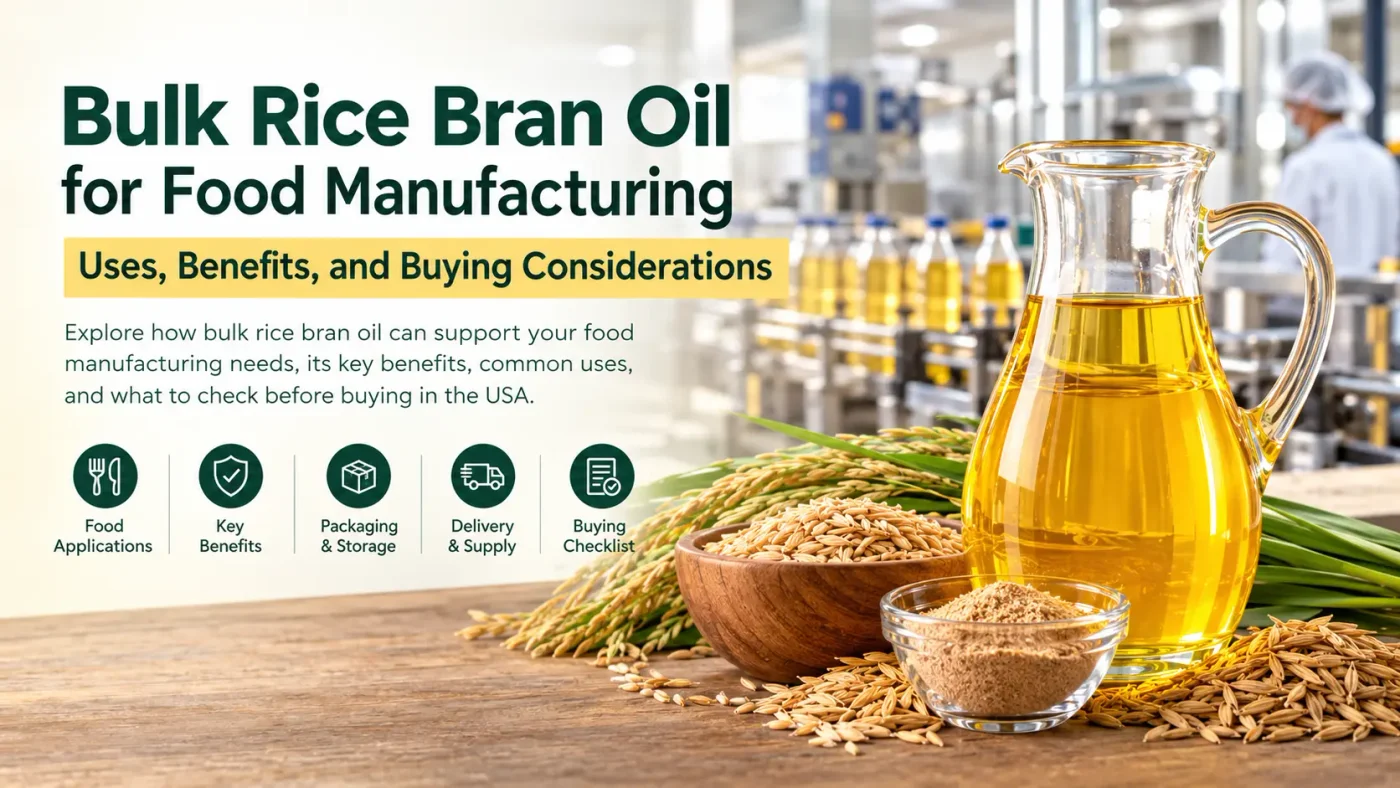
Food manufacturers need cooking oils that perform well across large production runs. The oil must suit the product, handle processing conditions, and remain consistent from one batch to the next. Bulk rice bran oil is used in food production because of its mild flavor, light texture, and cooking performance.
For manufacturers in the United States, choosing an oil also means looking at supply, quality standards, storage, and delivery. Understanding these factors can help you make a better purchasing decision.
What Is Rice Bran Oil?
So, what is rice bran oil? It is a vegetable oil made from the bran and germ layers removed during rice milling.
Rice bran contains natural oil that can be extracted and refined for food use. The finished oil has a mild taste, which allows it to work in foods without overpowering other ingredients.
Rice bran oil is used in cooking and food manufacturing. Its applications can range from frying and baking to sauces, dressings, and prepared foods.
Where Is Rice Bran Oil Used in Food Manufacturing?
Manufacturers select cooking oils based on the needs of their products and production methods. Rice bran oil can fit several food applications.
Commercial Frying
Frying requires an oil that can perform under high cooking temperatures. Manufacturers and foodservice businesses use suitable refined oils for fried foods, snacks, and other products.
The right oil can help maintain consistent cooking results across production batches.
Baked Foods
Rice bran oil can also be used in certain baked products. It can contribute to texture while adding little flavor to the finished food.
Its mild taste makes it useful when manufacturers want other ingredients to remain the main focus.
Sauces and Dressings
Oil plays an important role in many sauces and salad dressings. It can affect texture, mouthfeel, and how other ingredients blend together.
A neutral or mild-tasting oil can work well when the recipe calls for a balanced flavor.
Prepared and Processed Foods
Manufacturers may use vegetable oils in ready-to-eat meals, snacks, marinades, and other processed products.
The exact application depends on the recipe, processing method, and product specifications.
Why Do Manufacturers Consider Rice Bran Oil?
Choosing an edible oil involves more than looking at its source. Manufacturers need an oil that fits their recipe and production process.
Rice bran oil offers several practical characteristics.
Mild Flavor
Strong flavors can change the taste of a finished product. Rice bran oil has a mild flavor, making it suitable for recipes where the other ingredients should stand out.
This can be useful for sauces, dressings, baked foods, and prepared products.
Versatile Food Use
One reason manufacturers consider rice bran oil is its range of applications. It can be used in different types of food production instead of being limited to one product category.
This gives purchasing teams more flexibility when planning ingredients.
Light Texture
The texture of an oil can affect the eating experience of a finished product. Rice bran oil has a light feel that can work well in cooking and food preparation.
The best choice still depends on the specific recipe and production process.
Bulk Purchasing Changes the Buying Process
Buying oil in small containers is simple. Buying commercial quantities requires more planning.
When you purchase bulk rice bran oil, you need to consider how much your facility uses and how often you need deliveries.
Start by reviewing your production records. Calculate average monthly oil consumption and compare that figure with your available storage capacity.
You should also consider seasonal demand. A manufacturer with higher production during certain months may need a different delivery schedule.
What Should You Check Before Buying?
A product that looks suitable on paper may not meet your actual production needs. Ask for clear product information before placing a large order.
Important details include:
- Oil type and grade
- Refining process
- Product specifications
- Packaging format
- Minimum order quantity
- Shelf life
- Storage requirements
- Delivery schedule
- Quality documentation
Your purchasing and quality teams should review the specifications before approving the product.
Storage Matters After Delivery
Good quality can be affected by poor storage. Keep rice bran oil in a clean and suitable storage area after receiving it.
Protect the oil from excessive heat, direct sunlight, moisture, and contamination. Containers should remain properly sealed when the oil is not in use.
Follow the supplier’s storage instructions and maintain proper inventory records. Good stock rotation can also help prevent older products from remaining in storage for too long.
Choosing the Right Bulk Quantity
Buying more oil does not always mean making a better purchase.
A large order may reduce the number of deliveries, but it also requires more storage space and working capital. If your business cannot use the oil within the required period, excessive inventory can create unnecessary costs.
On the other hand, very small orders may increase shipping costs and create supply gaps.
The right quantity should match your production schedule, storage capacity, cash flow, and expected demand.
Bulk Rice Bran Oil vs. Other Vegetable Oils
Food manufacturers often compare several vegetable oils before selecting one. The decision depends on the product and its processing requirements.
When comparing oils, consider:
- Flavor
- Cooking performance
- Texture
- Product formulation
- Availability
- Packaging
- Cost
- Storage needs
- Supplier capacity
There is no single oil that works best for every food product. Your formulation and production process should guide the decision.
A Practical Checklist for Food Manufacturers
Before ordering commercial quantities, ask yourself a few simple questions:
- Does the oil meet our product specifications?
- Is the flavor suitable for our recipe?
- Do we have enough storage capacity?
- What quantity do we use each month?
- Can the supplier maintain regular supply?
- Are quality documents available?
- Does the delivery schedule fit our production plan?
- Does the total cost fit our purchasing budget?
Answering these questions before ordering can prevent problems later.
Making a Better Bulk Oil Buying Decision
For food manufacturers, the right cooking oil must fit the entire production process. Flavor, performance, quality, storage, supply, and cost all deserve attention.
Bulk rice bran oil can be a useful option for manufacturers looking for a mild-tasting vegetable oil with several food applications. Before making a purchase, compare the product specifications with your recipe and production needs.
If you are reviewing commercial edible oil suppliers, Lagarices – Azeites Do Alentejo LDA can also be considered as part of your supplier research. The best choice is the one that matches your product requirements, order volume, and long-term supply needs.
