
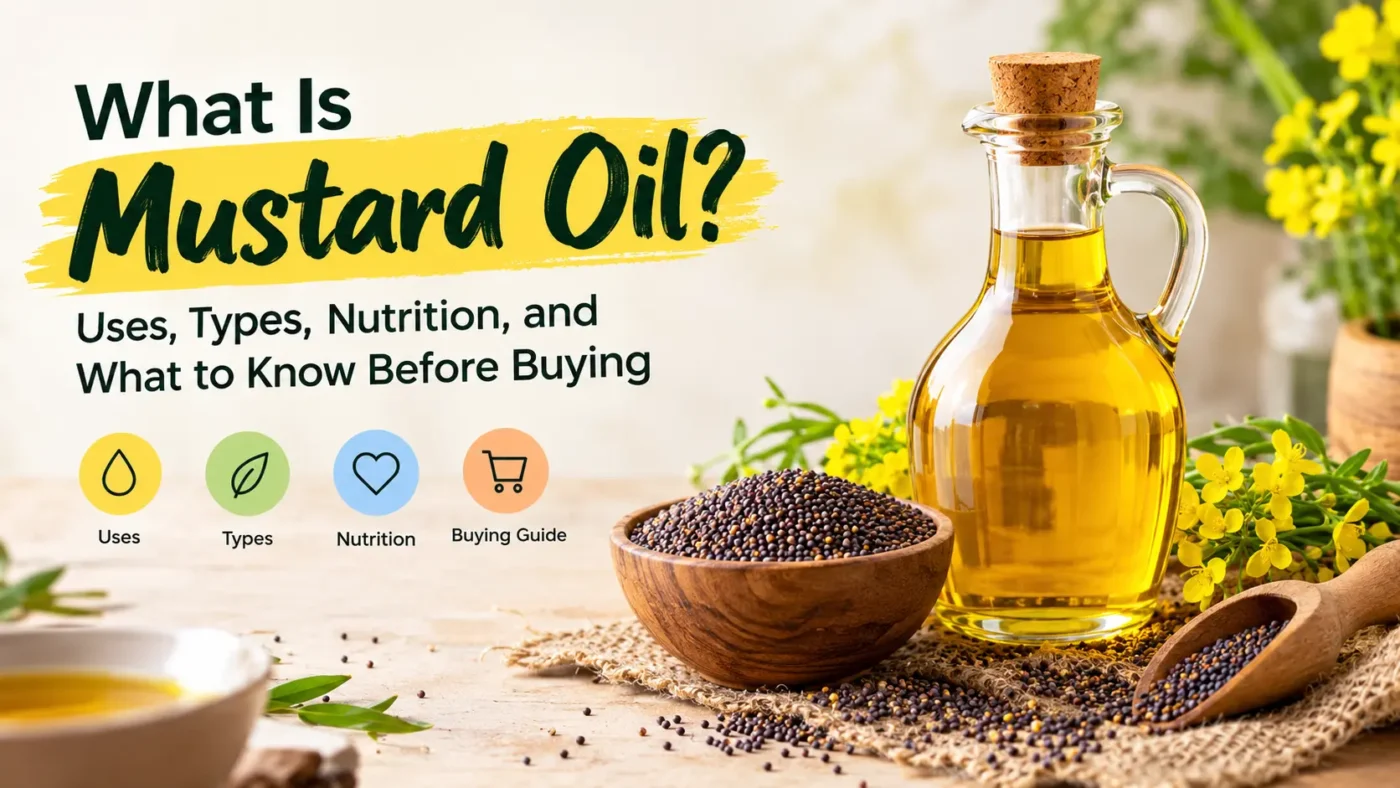
Mustard oil has been used in cooking for generations, especially across South Asia. Today, it is also found in specialty food markets and commercial food supply chains in the United States.
But what is mustard oil, and how does it differ from other cooking oils? Mustard oil comes from mustard seeds and has a strong, sharp flavor. Its taste, color, processing method, and intended use can vary by product.
Understanding these differences helps you choose the right mustard oil for your kitchen or food business.
What Is Mustard Oil Made From?
Mustard oil comes from the seeds of mustard plants. Manufacturers clean the seeds before extracting their natural oil.
Different mustard varieties can produce oils with different flavors and characteristics. The extraction method can also affect the final product.
The finished oil may have a yellow to amber color and a distinct aroma. Its flavor is stronger than many common cooking oils, such as soybean, canola, or sunflower oil.
That strong taste is one of its main characteristics.
How Is Mustard Oil Produced?
The basic process starts with harvested mustard seeds. The seeds are cleaned and prepared for oil extraction.
Oil can then be extracted through pressing or other processing methods. Further refining may be used depending on the product and its intended application.
The final product is filtered, processed, and packaged according to its specifications.
For commercial buyers, processing matters because it can affect flavor, color, purity, and other product characteristics.
What Does Mustard Oil Taste Like?
Mustard oil has a bold and noticeable flavor. It can taste sharp, pungent, and slightly spicy.
This makes it different from oils with a neutral taste.
In recipes that use mustard oil as a main ingredient, its flavor can become part of the overall character of the dish. In other recipes, only a small amount may be needed.
Your choice should depend on the flavor profile you want to achieve.
Common Uses of Mustard Oil
Mustard oil has several culinary uses. Its application depends on the product type and local food practices.
Cooking
Mustard oil is used in various traditional dishes. It can be used for sautéing, frying, and other cooking methods where its distinct flavor suits the recipe.
The appropriate cooking use depends on the product’s labeling and applicable food regulations.
Marinades
Its strong flavor makes mustard oil useful in marinades. It can add depth to recipes containing vegetables, meat, fish, or other ingredients.
Pickling
Mustard oil is also used in some pickling traditions. The oil can contribute flavor while forming part of the liquid surrounding the ingredients.
Sauces and Dressings
Some recipes use mustard oil in sauces and dressings. A small quantity can provide a strong flavor without adding several different ingredients.
Mustard Oil Types Can Differ
Not every mustard oil product is the same. The term can refer to products made using different seeds, extraction methods, or processing techniques.
Cold-Pressed Mustard Oil
Cold-pressed oil is produced by mechanically pressing mustard seeds without using high levels of heat during extraction.
It is often chosen for its characteristic aroma and flavor.
Expeller-Pressed Oil
Expeller pressing uses mechanical pressure to extract oil from the seeds. Heat can develop naturally during the process because of friction.
The final characteristics depend on the equipment, seeds, and processing conditions.
Refined Mustard Oil
Refining involves additional processing to remove or reduce certain compounds and impurities. It can change the oil’s color, aroma, and flavor.
The best option depends on how you plan to use the oil.
What Should You Check Before Buying Mustard Oil?
Whether you are buying mustard oil for home cooking or commercial use, check the product information first.
Look at:
- Ingredient information
- Processing method
- Product grade
- Intended use
- Packaging
- Storage instructions
- Country of origin
- Manufacturer information
- Applicable food labeling
If you are buying for a food business, ask for product specifications and quality documents before placing a large order.
Mustard Oil and Nutrition
Mustard oil contains different types of fatty acids, including monounsaturated and polyunsaturated fats.
Its exact nutritional profile depends on the mustard variety and processing method.
If nutrition is important to your purchasing decision, check the product’s nutrition facts and technical specifications instead of relying on general claims about mustard oil.
For dietary or medical concerns, use guidance from a qualified health professional.
How Should Mustard Oil Be Stored?
Proper storage helps protect the quality of cooking oil.
Keep the container tightly closed when not in use. Store it in a cool, dry place away from direct sunlight and excessive heat.
Avoid introducing water or food particles into the container. For commercial operations, follow the supplier’s recommended storage conditions and maintain proper stock rotation.
Good storage practices matter as much as the quality of the oil when you want consistent results.
Is Mustard Oil Right for Your Business?
The answer depends on your product, customers, and intended use.
A food manufacturer may choose mustard oil when a recipe requires its distinct flavor. A distributor may look for different packaging sizes and supply volumes. A restaurant may need an oil that fits specific dishes.
Before buying, match the product specifications with your actual requirements.
If you are sourcing edible oils for commercial use, Lagarices – Azeites Do Alentejo LDA can be included in your supplier research alongside other qualified suppliers.
Understanding Mustard Oil Before You Buy
So, what is mustard oil in simple terms? It is an oil extracted from mustard seeds, known for its strong flavor, distinctive aroma, and range of culinary uses.
The important part is knowing which type you need. Check its processing method, intended use, specifications, labeling, and storage requirements before making a purchase.
For both home cooks and food businesses, understanding the product first leads to a more informed buying decision.
